
Dive Resorts in the Philippines
The Philippines is widely recognized as one of the world’s leading diving destinations due to its geographic position within the Coral Triangle, an area known for exceptional marine biodiversity. With more than 7,000 islands and an extensive coastline, the country offers an extensive range of underwater environments, including coral gardens, steep walls, drift channels, muck diving sites, and historic wrecks. This variety supports a large network of dive resorts that serve both recreational and professional divers throughout the year.
Dive resorts in the Philippines are typically located close to prime dive sites, minimizing travel time between accommodation and boat departure points. Many operate as integrated facilities, combining lodging, dining, training centers, equipment rental, and retail services within one property. This setup allows divers to organize certification courses, guided dives, and specialty experiences in a streamlined manner. Resorts commonly follow internationally recognized training standards such as those of PADI, SSI, or other certification agencies, ensuring that diving instruction and safety procedures meet global benchmarks.
Accommodation options at dive resorts vary from modest beachfront rooms to more developed facilities with additional amenities such as swimming pools, spa services, and conference rooms. The defining feature, however, remains convenient access to high-quality diving. Many resorts operate dedicated boats equipped with tank racks, rinse stations, and emergency oxygen units. Experienced dive guides, often with detailed knowledge of local marine behavior and seasonal patterns, contribute significantly to the diving experience.
Marine Biodiversity and Diving Conditions
The marine ecosystems surrounding the Philippines are characterized by high coral cover and diverse fish populations. Reef fish, nudibranchs, crustaceans, cephalopods, reef sharks, and sea turtles are common sightings in many areas. Seasonal migrations also bring pelagic species such as tuna, jacks, and occasionally manta rays and whale sharks, depending on the region.
Water temperatures generally range between 26°C and 30°C throughout much of the year. Visibility can vary from 10 to over 30 meters depending on location, season, and tidal conditions. The dry season, typically from November to May, is considered optimal for diving in many areas, although local variations occur. Some sites are particularly known for drift diving due to consistent currents, while others offer sheltered conditions suitable for beginners and training dives.
Popular Regions for Diving
While dive opportunities are distributed across the archipelago, several regions have developed strong reputations for consistent conditions, reliable infrastructure, and concentration of dive resorts.
Anilao, Batangas
Located approximately two to three hours by road from Manila, Anilao serves as one of the most accessible dive destinations in the country. Its proximity to the capital makes it popular for weekend diving trips and short training courses. The area is especially known for macro diving, a term describing the search for small marine organisms such as nudibranchs, pygmy seahorses, frogfish, and various species of shrimp and crabs.
Anilao’s underwater terrain includes sandy slopes, coral bommies, and gentle reefs that create ideal conditions for underwater photographers. Dive guides in the region are often highly skilled at locating small and well-camouflaged species. Resorts typically offer multiple boat dives per day, as well as optional night dives that introduce a different range of marine activity. Technical diving courses and underwater photography workshops are also common here.
Puerto Galera, Mindoro
Puerto Galera is situated within the Verde Island Passage, frequently cited by marine scientists as one of the most biodiverse marine corridors globally. The convergence of currents in this area supports dense fish life and healthy coral systems. Dive sites range from shallow reefs suitable for beginners to deeper walls and drift sites designed for advanced divers.
The town and surrounding coastal areas host numerous dive resorts, many of which operate year-round. Divers booking packages often receive accommodation, boat dives, and equipment rental as part of an integrated plan. Popular dive sites include coral slopes rich in reef fish, channels known for strong currents and schooling fish, and muck diving areas where rare critters can be found. The diversity of sites within short boat rides makes Puerto Galera suitable for mixed-experience groups.
Infrastructure in Puerto Galera is relatively developed compared to more remote regions. In addition to diving, visitors can access restaurants, small shops, and land-based excursions. This combination of accessibility and biodiversity contributes to its continued popularity among both domestic and international divers.
Bohol
Bohol, particularly the area around Panglao Island and Balicasag Island, is recognized for clear water and well-preserved reef systems. Balicasag Island Marine Sanctuary is one of the main attractions, featuring steep walls, coral gardens, and regular sightings of sea turtles. Schools of jackfish are frequently observed in certain areas, forming dense formations along reef slopes.
Dive resorts in Bohol range from boutique establishments to larger beachfront properties. Most operate daily boat trips to Balicasag and other nearby dive sites. Conditions are often suitable for drift diving, depending on tidal movement. Wall dives provide opportunities to observe reef fish at different depth ranges, while sandy patches offer sightings of rays and other bottom-dwelling species.
The island of Bohol also supports tourism beyond diving, including visits to the Chocolate Hills and historical sites. As a result, dive resorts here often accommodate guests who divide their time between underwater activities and terrestrial exploration.
Other Notable Dive Destinations
Beyond these well-known hubs, the Philippines offers numerous specialized diving areas. Malapascua Island is associated with thresher shark encounters at Monad Shoal. Coron in Palawan is recognized for its World War II wreck dives, with several Japanese shipwrecks accessible to recreational divers. Dauin in Negros Oriental is characterized by muck diving sites comparable to those of Anilao. Siquijor, Camiguin, and Southern Leyte also maintain established dive resort networks catering to divers seeking less crowded environments.
Each destination develops its own operational rhythm and marine profile. Some emphasize shark sightings, others focus on macro life, and still others highlight coral coverage or wreck penetration. Dive resorts adapt accordingly, offering specialized guiding and equipment support for their respective underwater conditions.
Liveaboards in the Philippines
In addition to land-based dive resorts, the Philippines supports a substantial liveaboard sector. Liveaboards are vessels designed to accommodate divers for multiple days at sea, combining lodging, meals, and diving operations in one mobile platform. These operations enable access to remote marine areas that are impractical to reach by day trip.
Liveaboards vary in size and level of comfort. Some offer compact cabins and straightforward dining facilities, while others provide more spacious accommodations with private bathrooms and air conditioning. Regardless of comfort level, the central objective remains efficient access to a series of dive sites over consecutive days.
Benefits of Liveaboard Diving
The primary operational advantage of liveaboards lies in their mobility. Instead of returning to shore after each dive, guests remain near dive sites, reducing transit time and increasing the number of dives possible during a given period. A typical itinerary may include three to four dives per day, including night dives where conditions permit.
Because liveaboards are not constrained by proximity to a single coastal base, they can follow itineraries that incorporate multiple islands or reef systems. This mobility enables divers to experience varied underwater landscapes in one continuous trip. Equipment storage and preparation areas are usually permanently set up on deck, allowing efficient tank changes and gear rinsing between dives.
Safety protocols on reputable liveaboards include onboard oxygen systems, emergency communication devices, and trained staff prepared to manage diving-related incidents. Guests typically attend detailed briefings before each dive, covering entry and exit procedures, depth limits, and current patterns.
Tubbataha Reefs Natural Park
Tubbataha Reefs Natural Park, located in the Sulu Sea, is accessible only by liveaboard due to its remote offshore position. The park is designated a UNESCO World Heritage site and is open to diving from approximately March to June, when sea conditions are generally stable.
The reef system features steep walls, expansive coral plateaus, and large marine life including reef sharks, manta rays, and schooling pelagic species. Strict environmental regulations govern diving operations in this protected area. Liveaboard operators must secure permits and comply with mooring policies designed to prevent anchor damage to coral structures. Visitor numbers are therefore controlled, contributing to the preservation of reef conditions.
Apo Reef, Mindoro
Apo Reef Natural Park, located off the western coast of Mindoro, is another destination commonly included in liveaboard itineraries. It is recognized as one of the largest contiguous coral reef systems in the region. The reef complex includes shallow coral gardens, deeper walls, and lagoon areas. Divers may encounter reef sharks, large schools of fish, and varied coral formations.
Some itineraries combine Apo Reef with additional sites in Coron or other parts of Palawan, providing exposure to both reef and wreck environments. This integrated approach appeals to divers seeking ecological variety within a single voyage.
Choosing Between Dive Resorts and Liveaboards
Selecting between a land-based dive resort and a liveaboard involves practical considerations of time, budget, diving objectives, and travel logistics. Dive resorts often allow greater flexibility in scheduling, making them suitable for travelers who prefer shorter dive days or who wish to combine diving with land excursions. They may also be more appropriate for new divers completing certification courses, as shore-based facilities can offer classroom spaces and confined water training areas.
Liveaboards are typically structured around fixed itineraries and departure dates. They emphasize frequent diving and exposure to remote locations. For divers aiming to visit sites such as Tubbataha or certain sections of Apo Reef, liveaboards are not merely an option but a logistical requirement. However, the concentrated schedule may be less suited to individuals who prefer extended surface intervals or non-diving activities.
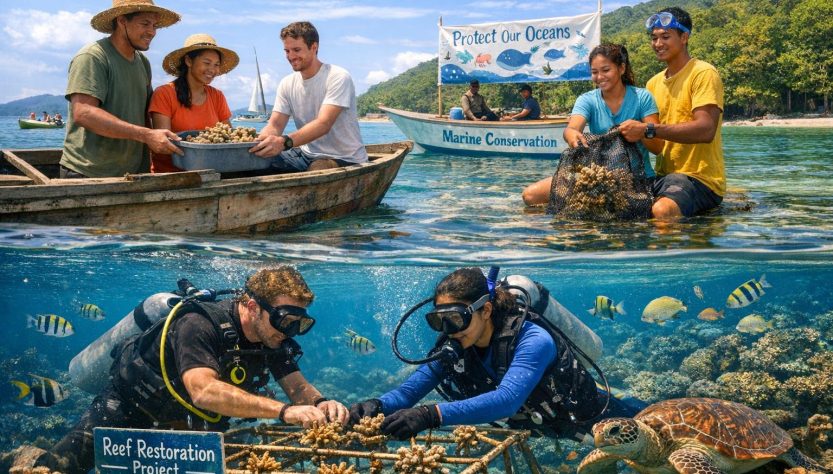
Environmental impact is another factor. Reputable operators, whether resort-based or liveaboard, increasingly adopt marine conservation practices such as reef-safe mooring systems, waste management protocols, and diver education programs. Prospective guests often review operator standards, certifications, and independent evaluations before booking. Online platforms such as Liveaboard.com and recognized diving communities including ScubaBoard provide user feedback and operational details.
Travel logistics further influence decision-making. Some dive resort regions are accessible by short domestic flights and road transfers, while others require multiple connections by air and boat. Liveaboards generally depart from specific ports, requiring synchronized arrival times. Planning should account for weather patterns, especially during the southwest monsoon season when sea conditions can affect schedules in certain parts of the archipelago.
Practical Considerations for Divers
Equipment rental standards in the Philippines are generally consistent with international expectations, though divers frequently choose to bring personal masks, computers, and exposure suits for comfort and familiarity. Nitrox is widely available at established resorts and on many liveaboards, often for an additional fee.
Health and safety infrastructure varies by location. Major hubs have access to recompression chambers in cities such as Manila, Cebu, and Puerto Princesa. Divers are typically advised to secure appropriate dive insurance through providers such as Divers Alert Network. Pre-trip medical consultation may be appropriate for individuals with pre-existing conditions.
Finally, environmental awareness forms part of the diving culture in the Philippines. Marine protected areas enforce rules regarding buoyancy control, prohibited contact with coral, and restrictions on collecting marine life. Responsible dive operators emphasize adherence to these guidelines in briefings and training sessions.
In summary, dive resorts and liveaboards in the Philippines provide complementary approaches to exploring one of the most biologically diverse marine regions in the world. Land-based resorts offer flexibility, accessibility, and integration with local communities, while liveaboards enable extended exploration of offshore and remote reef systems. The structure of the Philippine archipelago, combined with established tourism infrastructure, ensures that divers can select an operational model aligned with their experience level, schedule, and underwater interests.